Visual tour
These are the actual Docbank interfaces backed by temporary synthetic vaults, not mockups. The names, contents, hashes, identifiers, storage history, and audit history were generated for the captures.
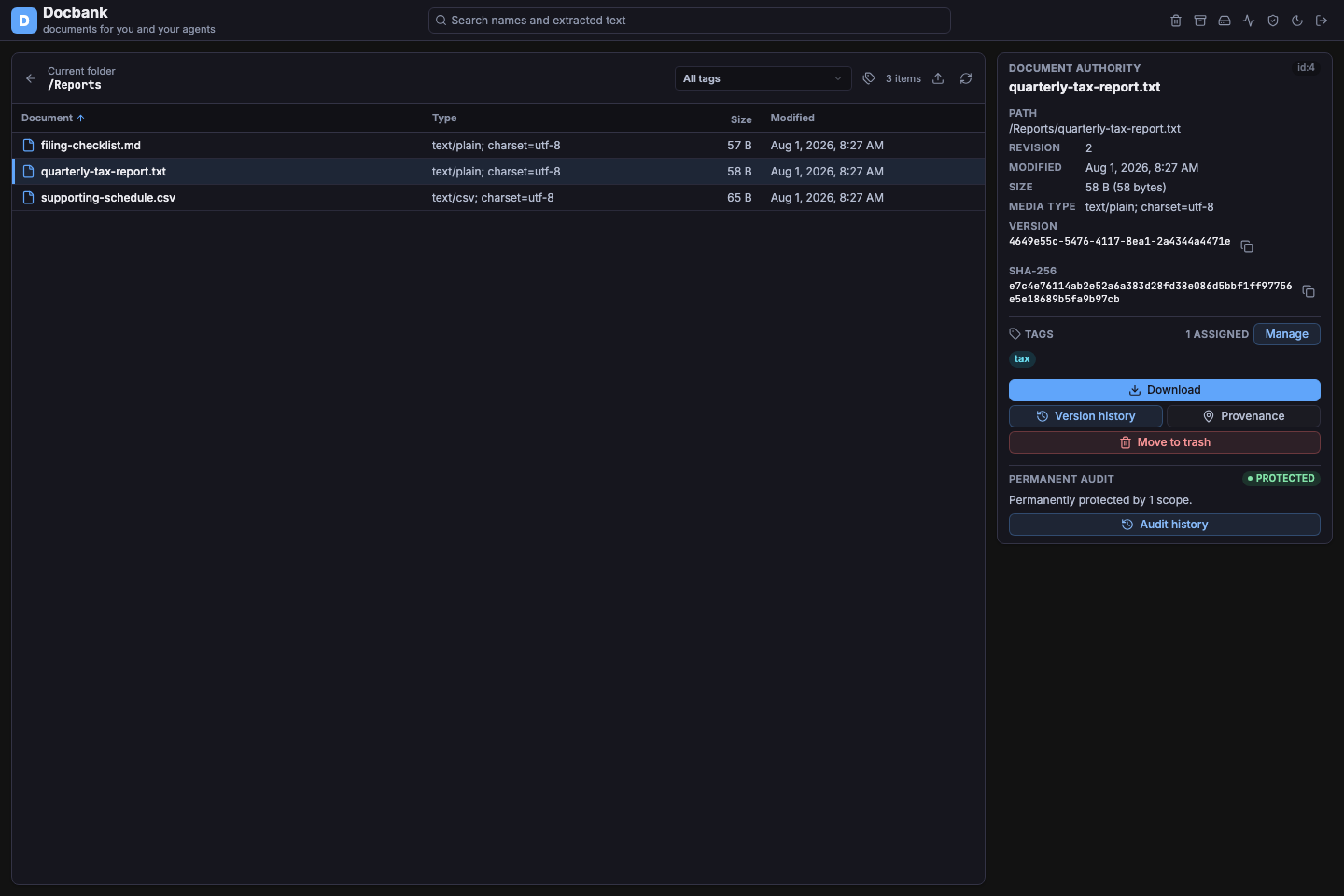
Browse one shared document authority
The local web application combines a sortable document table with the selected node's current path, stable ID, revision, immutable version, SHA-256 identity, tags, provenance, and permanent-audit status. The browser receives scoped, daemon-lifetime credentials rather than the daemon's master API key.
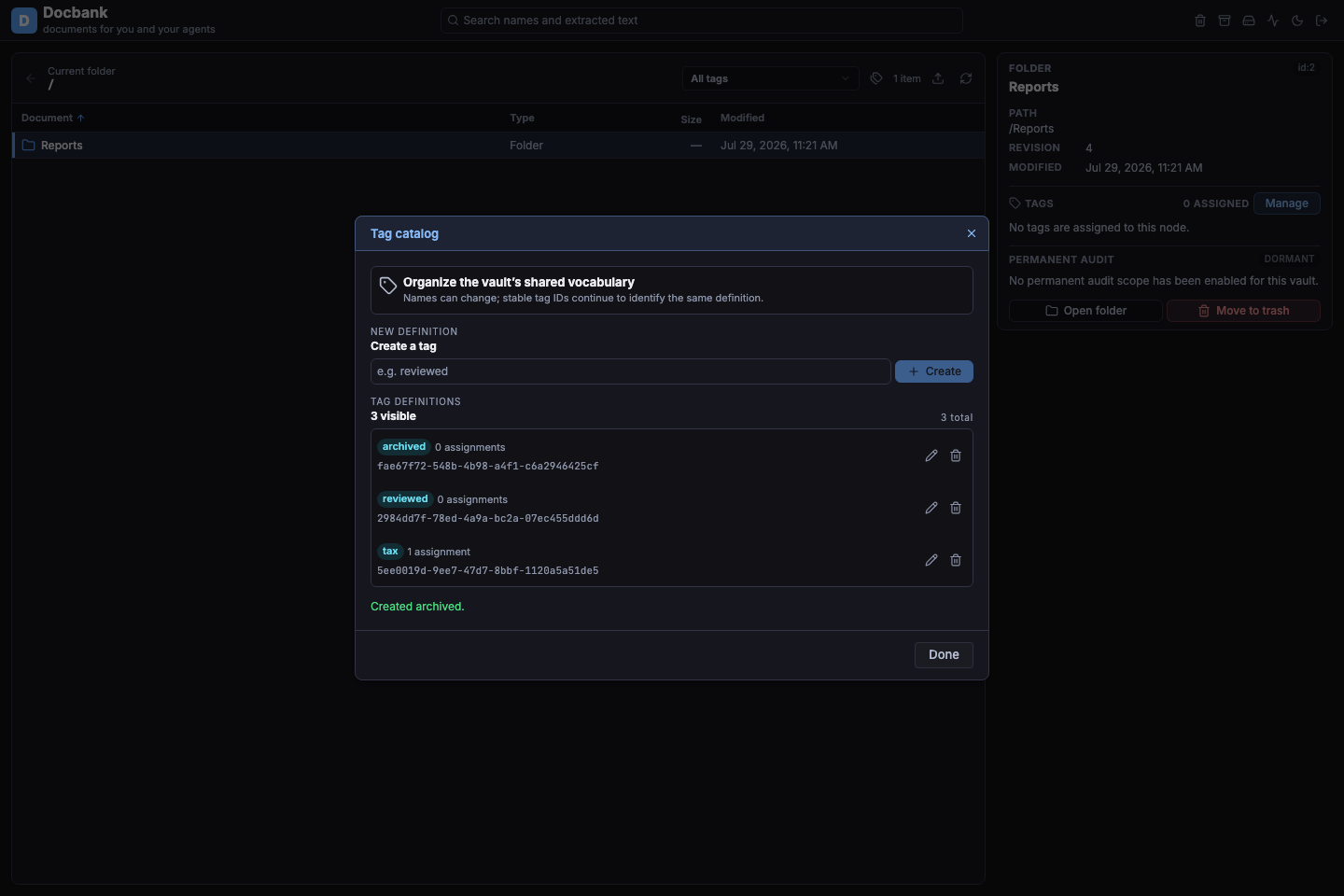
Organize independently of folders
Tags form a shared vocabulary with stable UUIDs and revision-protected definitions. People can manage the catalog or a selected document's assignments in the web application; agents use the same bounded daemon API.
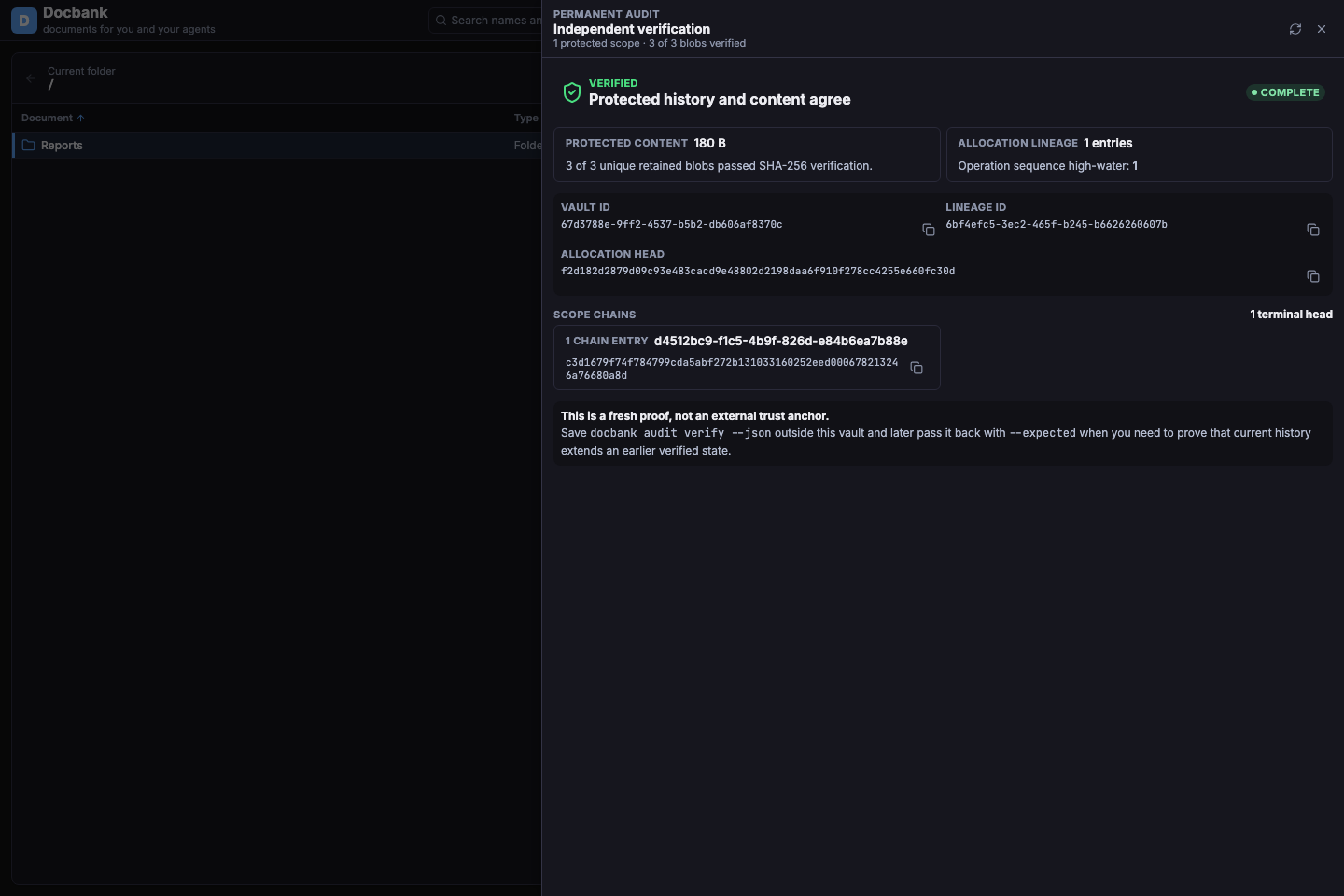
Verify permanent history
An audited scope permanently retains its protected versions and supported changes. Independent verification replays the history, re-hashes protected content, and returns terminal scope heads that can be recorded outside the vault for later comparison.
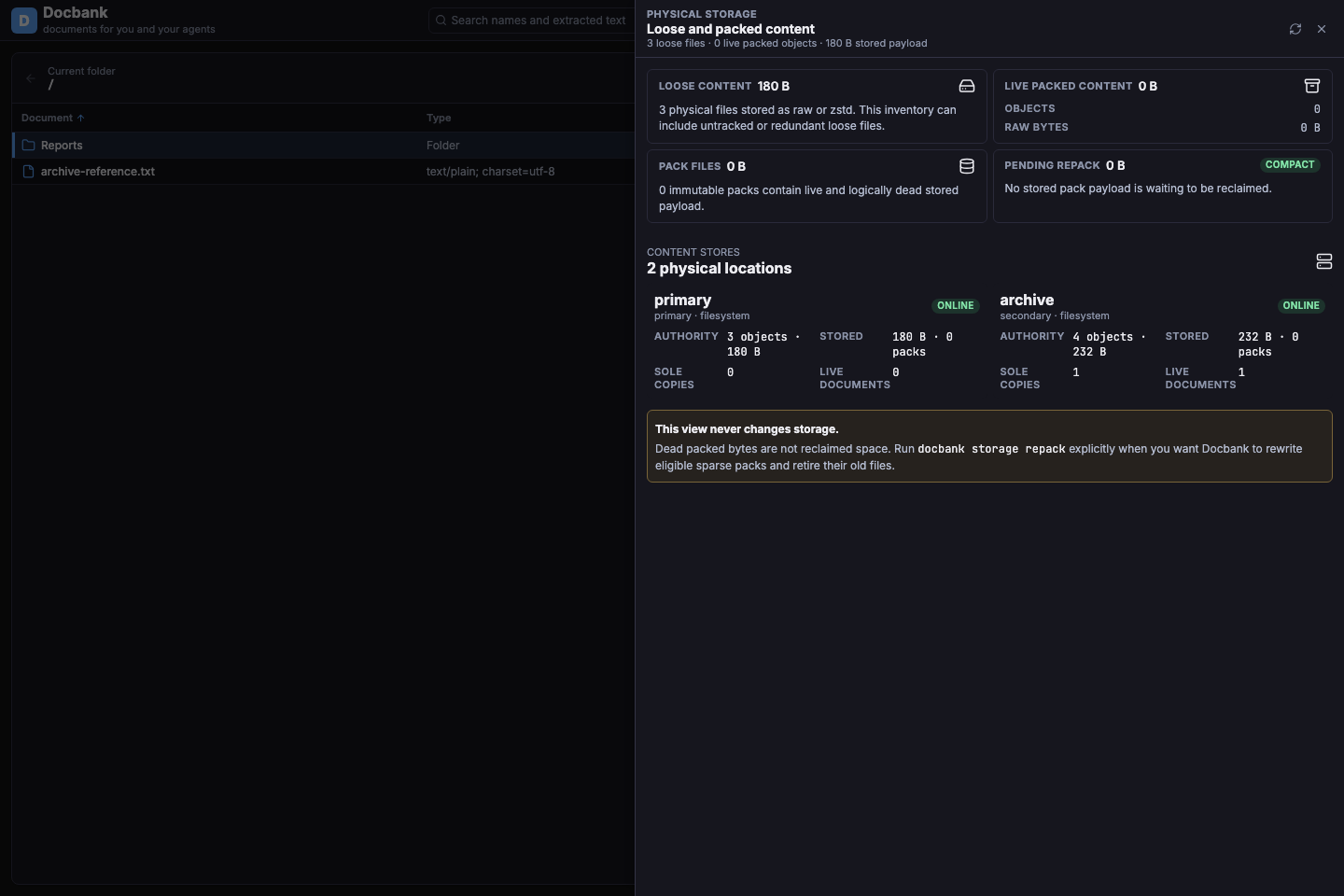
See where physical authority lives
The document catalog remains authoritative while verified content can occupy a fixed local primary and configured filesystem or S3-compatible secondaries. The web view is deliberately read-only: it separates logical authority, physical inventory, store health, sole copies, and live-document impact without exposing deployment paths or credentials.
Operate from a terminal
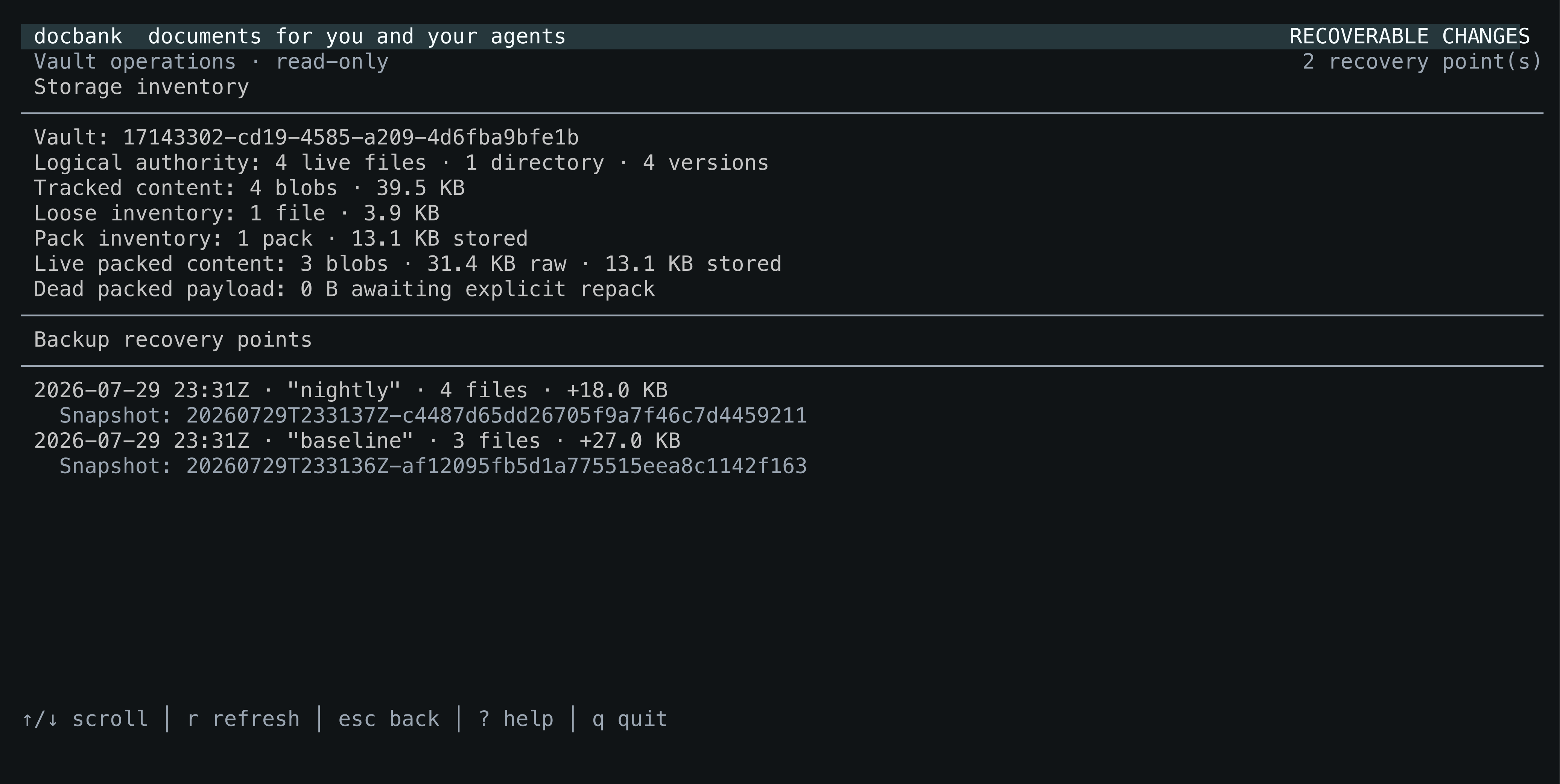
The daemon-backed TUI provides analytical tree and search views, complete document identity, permanent history, recoverable trash and restore, job status, and a read-only operational screen. Storage and backup results load independently so one unavailable repository does not hide live-vault status.
Continue with the Quickstart, or choose a task from Capabilities.